Contact
Biography
I am an urban and digital geographer working at the intersection of urbanisation, technology and society. My research contributes to debates on expanded urbanisation, critical property studies, digital geographies and agrarian-urban transitions.
I am currently a British Academy Wolfson Fellow (2023-2025), conducting a project, Digital enclosures: automating property in India that examines the politics of PropTech schemes in rural and peri-urban areas of India. In 2025 I was awarded the Philip Leverhulme Prize in Geography in recognition of my contributions to the study of agrarian urbanisation.
I hold a PhD in Urban Geography from the Department of Geography at King's College London. Prior to joining the School at Nottingham I was a Leverhulme Early Career Postdoctoral Fellow at University College London, and a postdoctoral fellow in the Department of Social Anthropology at the University of Bergen. I have previously taught Human Geography at the London School of Economics and Political Science and at King's College London.
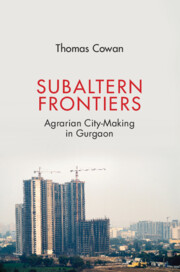
My book, Subaltern Frontiers: agrarian city-making in Gurgaon, India was published by Cambridge University Press in December 2022. The book explores the social, political and economic geographies of India's spectacular urban transformation since the early 1990s, examining the development of the 'Gurgaon model' of privatised urban planning and development. The book argues that the production of real estate and labour markets in Gurgaon has relied upon the speculative remediation of agrarian property regimes, governance institutions, and class structures. The book builds upon scholarship within subaltern studies, postcolonial marxist geographies, feminist geographies and anthropologies of global real estate to develop a reading of contemporary urbanisation in north India.
Elsewhere my work has been published in Transactions of the Institute of British Geographers, Antipode, Urban Geography, City, International Journal of Urban and Regional Research, Focaal, Geoforum, and Environment and Planning E: Nature and Space.
Expertise Summary
My research is broadly situated at the intersection of critical urban studies, agrarian studies and science and technology studies, and is interested in the political and technological mediation of urban development in the majority world.
I. Digital enclosures and propertied statecraft
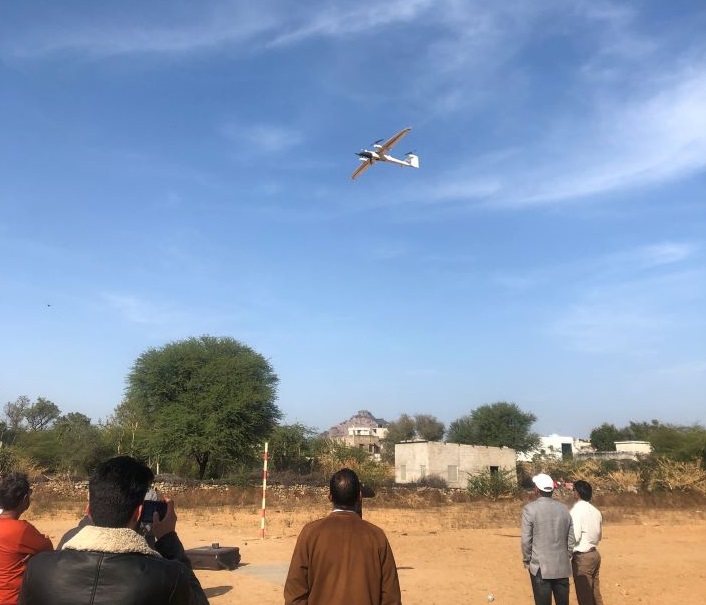
Land and property are increasingly subject to a series of digitisation efforts aimed at erasing traditional, customary land uses, establishing standardised property forms and incorporating property data into broader digital public infrastructures. Property digitisation is commonly viewed by transnational development institutions and governments alike as something of a silver-bullet able to transform complex land systems into tradable assets, incorporate rural and peri-urban communities into financial markets and simplify state bureaucratic practice. At the same time, cadastral and property data is viewed as essential components of emerging state digital infrastructure and governance projects that are revolutionising contemporary statecraft. In this research theme, my work examines the social and political mediation of emerging 'PropTech' industries and infrastructures, considering the complex ways that state officials, surveyors, engineers and residents contest property's transformation through digital technologies. This was the primary focus of my British Academy Wolfson Fellowship (2023-2025). Ethnographic research on SVAMITVA, perhaps the world's largest digital property titling scheme, was conducted across three states in North India, tracing how the design, classification and implementation of the scheme was shaping processes of mass land enclosure, disenfranchisement and new forms of digital statecraft.
Key publications
Cowan, T., 2025. High鈥恟esolution property: Drone enclosures in digital India. Transactions of the Institute of British Geographers, 50(4)
Cowan, T., 2025. Digitising peripheral property: Assetisation, Platformisation and disconnection. In A Datta and F Hoefsloot (eds) Informational peripheries: Rethinking the urban in a digital age. Bloomsbury: UCL Press.
Cowan, T., 2021. Uncertain grounds: Cartographic negotiation and digitized property on the urban frontier. International Journal of Urban and Regional Research, 45(3), pp.442-457.
II. Agrarian urbanisation

In peri-urban areas across the Global South, politicians, planners and developers are engaged in a voracious scramble to refashion rural land for large-scale urban development projects. Much of this development has taken place on the outskirts of the traditional metropoles, in the territorially flexible urban frontier. But how exactly do governments capture and convert such large tracts of rural land for urbanisation? How is this achieved in democratic contexts wherein people's rights to land are legally and politically safeguarded? And, how are rural societies convinced to trade in their land, livelihoods and cultures for urban development purposes. These questions have long guided my research on peri-urbanisation in the majority world. My work on 'agrarian urbanisation' interrogates the series of trade-offs, dependencies and constraints posed between urbanising actors and rural communities on the urban frontier. This research draws upon post-colonial marxist, critical urban and agrarian studies approaches and considers the political economic, ideological and technological processes through which rural communities are enlisted into projects of their own dispossession, and therein how these communities use this position to shape and reshape development agendas, leading to forms of 'agrarian urbanisation'. Research in this domain was supported by both an ESRC PhD Fellowship based at the Department of Geography at King's College London, and later by a Trond Mohn Research Fellowship at the Department of Social Anthropology at the University of Bergen. The research draws from fifteen years of ethnographic research alongside rural communities in the city of Gurgaon in North India.
Key publications
Cowan, T., 2023. Subaltern frontiers: Agrarian city-making in Gurgaon. New Delhi: Cambridge University Press.
Cowan, T., 2018. The urban village, agrarian transformation, and rentier capitalism in Gurgaon, India. Antipode, 50(5), pp.1244-1266.
Cowan, T., 2021. The village as urban infrastructure: Social reproduction, agrarian repair and uneven urbanisation. Environment and Planning E: Nature and Space, 4(3), pp.736-755.
Cowan, T., 2025. Urbanization without guarantees: articulation, rentier capitalism and occupancy on the agrarian urban frontier. Urban Geography, 46(8), pp.1691-1714.
Teaching Summary
My teaching focuses on advanced modules in Urban Geography, Digital Geography, Political Economy, International Development, and the Geographies of Gender, Labour and Property.
Current teaching (*convenor):
Year 1 - Tutorial
Year 2 - Urban Geography*
Year 2- Techniques in Human Geography
Year 2 - Research Tutorial
Year 3 - Digital Geography*
PhD Supervision:
I welcome PhD candidates in geography interested in any area of research. I am particularly interested in supervising PhD projects focusing on the following subjects: Critical urban studies | Southern urbanism | Labour geographies | Critical property studies | Digital geographies
Research Summary
See my for an up to date list of publications.
Selected Publications
COWAN, THOMAS, 2022. Cambridge University Press.
COWAN, T., 2021. International Journal of Urban and Regional Research. 45(3), 442-457